
On this page
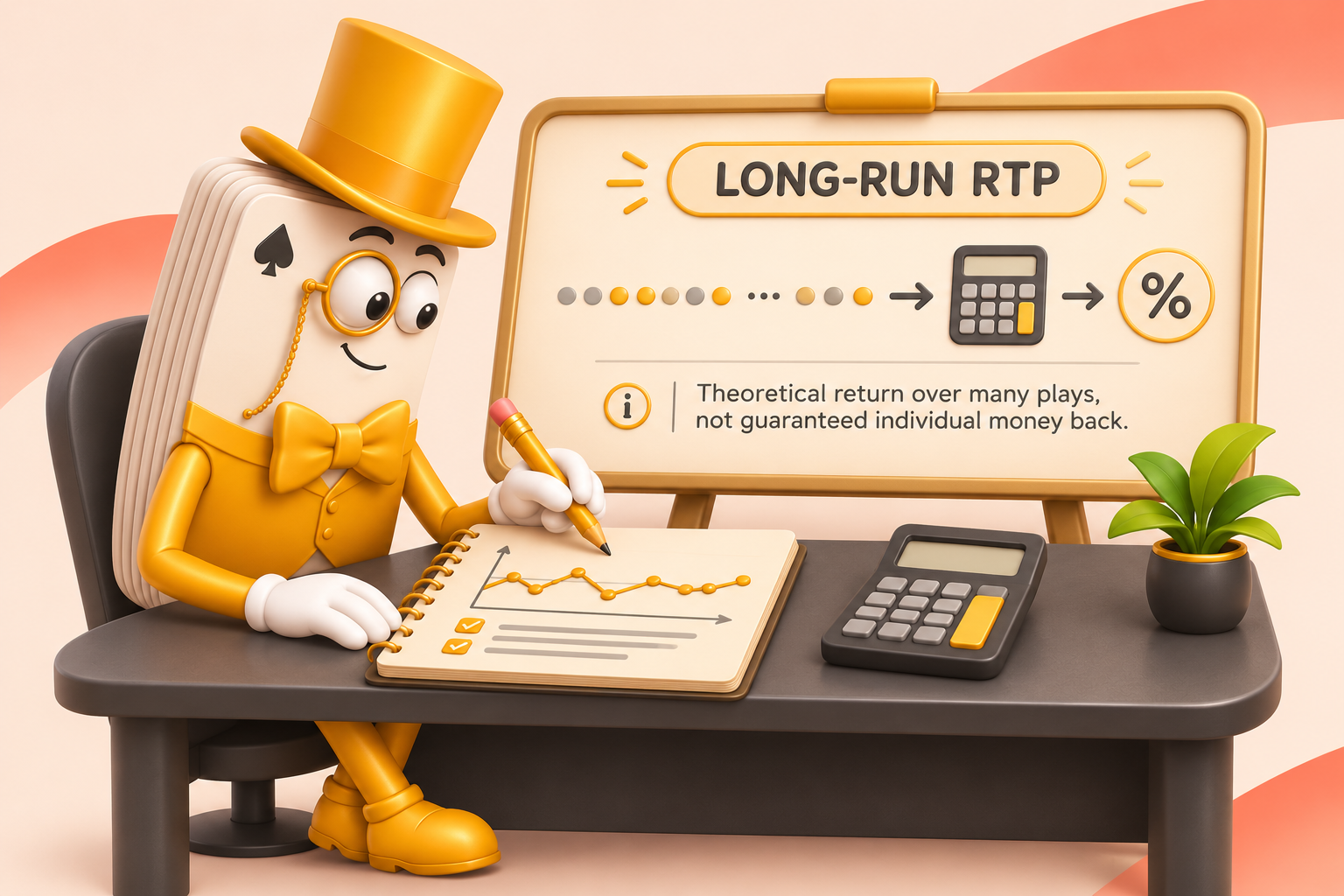 Casino games can look very different on the surface, but behind the graphics, bonuses, and spinning reels is a surprisingly precise set of mathematics. RTP is one of the most useful numbers for understanding those maths, but it’s also one of the most misunderstood.
Does a 97% RTP mean you’ll get €97 back? Why can two games with the same RTP feel completely different? And can a game really become “due” for a win after a long losing streak?
Online Casinos
for Virginia

This guide breaks down RTP in simple terms, from how it’s calculated to how it relates to volatility, house edge, RNGs, and even the growing role of AI.
RTP in one minute
- RTP (Return to Player) is the percentage of money wagered on a game that is theoretically returned to players over time.
- RTP vs. house edge: they are two sides of the same coin. House edge = 100% minus RTP, so a 97% RTP means a 3% house edge.
- Long run, not per session: RTP only becomes meaningful across a very large number of bets. It is not a prediction of your next spin or session.
What Is RTP and How Does It Work?
RTP, or Return to Player, is a percentage that shows how much of the money wagered on a casino game is theoretically returned to players over time.
For example, a game with a 97% RTP has a theoretical return of €97 for every €100 wagered, with the remaining €3 representing the casino’s theoretical advantage.
Worked example: 97% RTP
| Total wagered | Theoretical return (97%) | Casino theoretical edge (3%) |
|---|---|---|
| €100 | €97 | €3 |
| €1,000 | €970 | €30 |
These are long-run expectations. In a single session you could wager €100 and win nothing, or get back considerably more than €97.
However, RTP is a long-term statistical measure, not a prediction of what will happen during your next spin or gaming session. You could wager €100 and win nothing, or get back considerably more than €97.
Casino games produce random outcomes, so short-term results can vary significantly. Unfortunately, the maths doesn’t care if you feel you’re “due a win.”
The RTP figure becomes meaningful across a very large number of bets, when actual results tend to move closer to the game's mathematical expectation. In practical terms, it gives players a useful way to compare games and understand their built-in mathematical return.
RTP vs. House Edge
RTP and house edge are two sides of the same mathematical coin. They describe the same game from different perspectives: RTP shows the theoretical percentage returned to players, while the house edge shows the percentage the casino expects to keep over the long run.
Calculating the house edge is simple: subtract the RTP from 100%. So, a game with a 97% RTP has a 3% house edge. In theory, for every €100 wagered over a very large number of bets, €3 represents the casino’s expected advantage.
In some situations, however, things can become more advantageous for players, particularly when progressive jackpots reach unusually high levels.
This doesn’t mean the casino wins every bet or that players can’t have winning sessions. You can still get lucky and win big in the short term. However, over a sufficiently large number of bets, the game’s mathematics gives the casino its advantage.
RTP vs. Volatility
 Not all games with the same RTP feel the same to play. That’s where volatility comes in. While RTP describes a game’s theoretical long-term return, volatility gives you an idea of how often you might win and how much those wins could be worth.
Low-volatility games generally offer smaller, more frequent wins, while high-volatility games can have less frequent wins but may offer larger payouts when they hit. Medium-volatility games sit somewhere in between.
What players should remember is that RTP and volatility aren’t the same thing. Two games could both have a 97% RTP but feel completely different to play. One might deliver regular small wins, while the other could leave you waiting much longer for a bigger payout.
So, if RTP tells you how much a game is expected to return, volatility gives you a better idea of how that return may be distributed.
| RTP | Volatility |
|---|---|
| Describes a game's theoretical long-term return | Gives an idea of how often you might win and how much those wins could be worth |
| Tells you how much a game is expected to return | Tells you how that return may be distributed |
| Becomes meaningful across a very large number of bets | Low: smaller, more frequent wins. High: less frequent wins, possibly larger payouts. Medium: in between |
| Two games can share the same RTP (for example 97%) | ...yet feel completely different to play |
RTP by Casino Game: Which Games Have the Highest RTP?
Different casino games come with different RTPs, largely because of their rules and mechanics.
Blackjack and video poker can offer some of the highest theoretical returns, with optimal strategy pushing RTP above 99% in certain variants.
The actual return depends heavily on the specific rules, paytable, and, for games such as blackjack, how well the player follows optimal strategy.
Craps is another good example of why bet selection matters. The Pass Line bet has an RTP of about 98.59%, while some proposition bets can fall below 90%. Live casino games generally follow the same mathematics as their table-game counterparts.
Then there are slots, where RTP can vary dramatically, typically ranging from around 85% to 98%.
Crash games work differently, with players typically choosing when to cash out before a multiplier ends the round. Their RTP can vary between games, so it’s worth checking the specific game’s published figure rather than assuming all crash games have the same return.
Typical RTP by game type (figures from this guide)
| Game | RTP mentioned |
|---|---|
| Blackjack and video poker | Above 99% in certain variants with optimal strategy |
| Craps: Pass Line bet | About 98.59% |
| Craps: some proposition bets | Can fall below 90% |
| Slots | Typically around 85% to 98% (96% might be typical) |
| Crash games | Varies by game; check the published figure |
| Live casino games | Generally follow the same mathematics as their table-game counterparts |
As a general rule, a higher RTP means a lower theoretical house edge, but “good” depends on the type of game and its rules. An RTP of 96% might be typical for a slot, while players may expect considerably higher figures from certain table games played with optimal strategy.
But is the highest RTP always the best choice? Not necessarily.
A lower RTP doesn't necessarily mean a game can't produce a big win, but it does mean the theoretical return is less favourable over the long run.
Game rules, volatility, and, in some cases, the decisions you make can all affect your experience and potential returns. A 99% RTP game might look great on paper, but that number alone doesn't tell the whole story.
Before you hit that spin or deal button, check the RTP; your wallet might appreciate the extra few seconds.
Why Casino Games Have Different RTPs
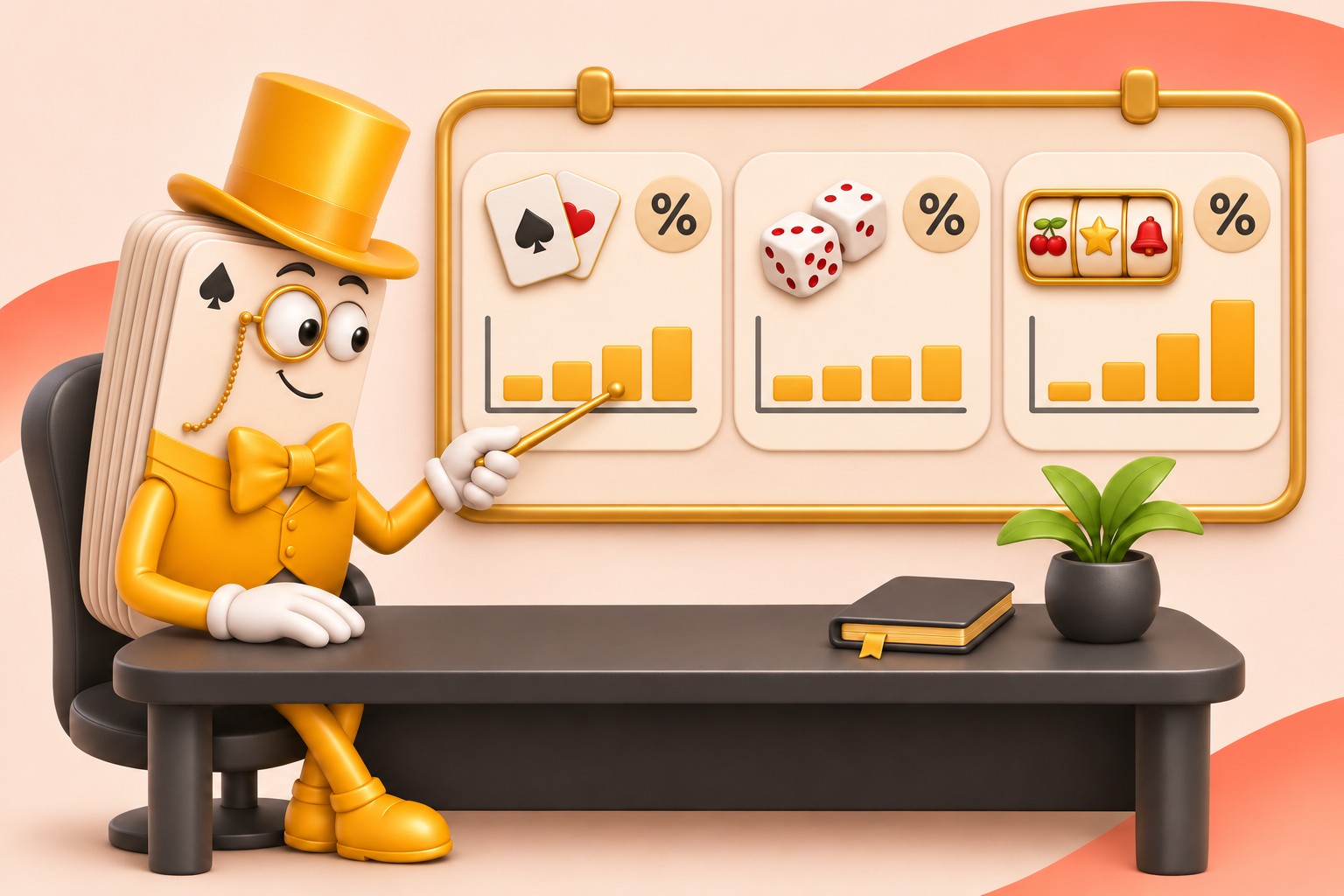 The numbers can vary considerably, but there’s a reason for that: RTP isn't simply assigned to a game at random. It comes from the mathematical design of the game, including its mechanics, rules, payouts, and probabilities.
In blackjack, for example, the rules around dealer actions and player decisions affect the potential RTP. In slots, the combination of symbols, payouts, bonus features, and other mechanics determines the game’s theoretical return.
There can also be different RTP configurations of the same game. Developers may create several versions with different mathematical settings, while casinos may offer particular configurations depending on their market or setup. This is why two games that look almost identical can have different RTPs.
In short, the number isn’t random; it’s built into the game’s mathematics.
How to Check a Game's RTP
Checking a game’s RTP is usually easier than you might think. On many online casino games, you’ll find it in the information, help, or settings menu, sometimes alongside the paytable and game rules. The paytable can also give you useful information about how the game’s payouts are structured.
If the RTP isn’t shown in the game itself, check the casino’s game page or look for information from the game developer. Reputable developers generally provide details about their games and their mathematical specifications.
Can’t find the RTP anywhere? That’s a good reason to pause before playing. Don’t assume that a game has a high RTP simply because it looks polished or has impressive bonuses.
If the figure isn’t clearly available, look for reliable information elsewhere or consider choosing a game where the RTP is easier to verify. A few seconds of checking can tell you more than a flashy jackpot ever will.
Checklist: how to check a game's RTP
RTP and RNGs
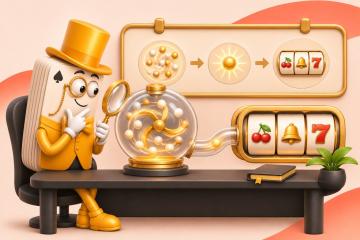
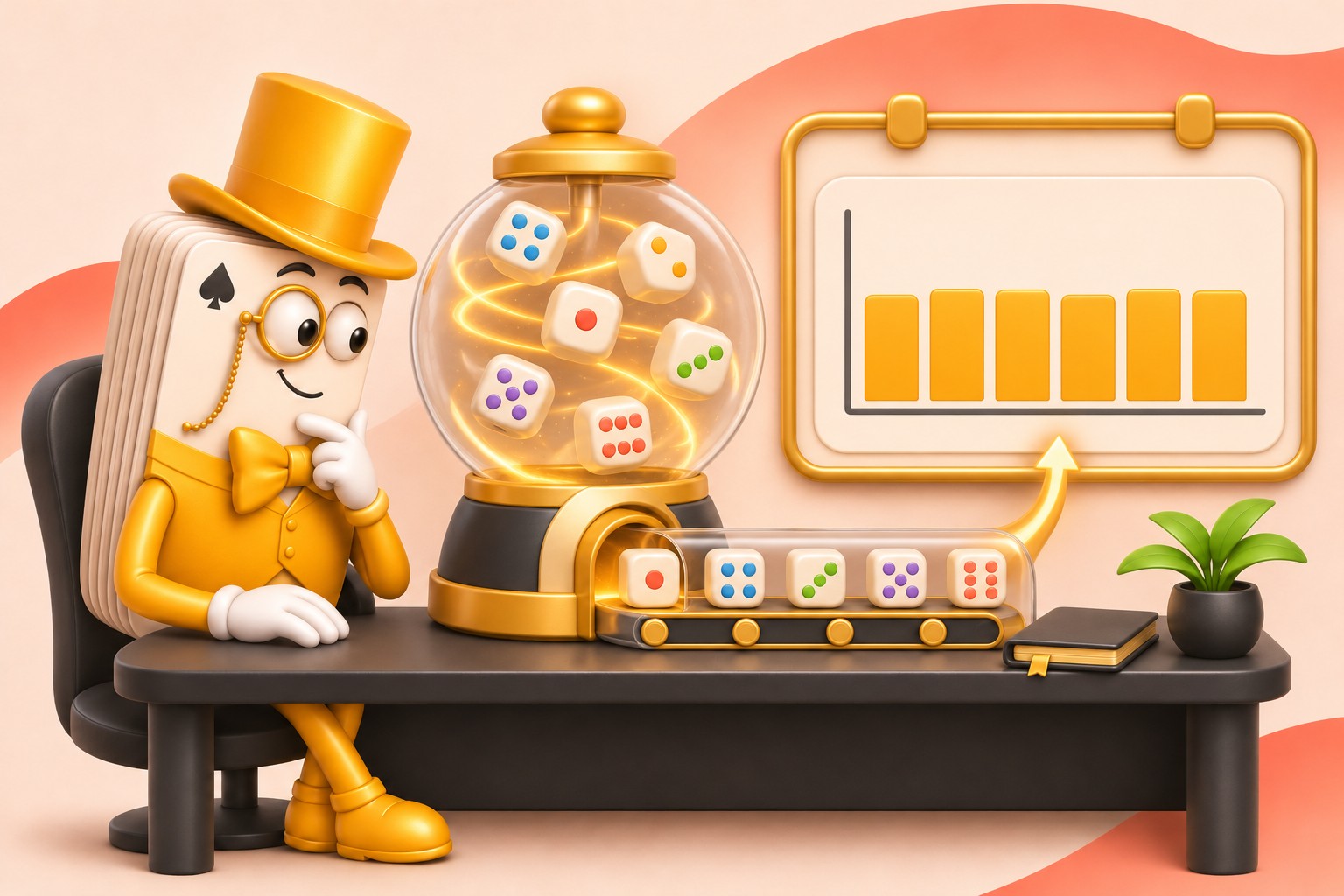 In RNG-based online casino games, software uses a Random Number Generator to produce random results such as slot outcomes or virtual card draws. Its job is to produce outcomes independently and unpredictably, following the mathematical rules built into the game.
This is where RTP comes in, but the two terms shouldn’t be confused. The RNG determines what happens on each individual play, while RTP describes the game’s theoretical return over a very large number of plays.
In games built around independent RNG outcomes, such as standard slot spins, previous results don’t influence what comes next.
How Is RTP Calculated?
RTP is calculated from the possible outcomes of a game, their probabilities, and the payouts attached to them. In simple terms, the formula looks at what a game is expected to return across a very large number of plays.
For example, with a 97% RTP, the theoretical return is €97 for every €100 wagered.
The result of any individual session can differ significantly from this theoretical figure, which is why sample size matters. As the number of bets increases, actual results can gradually move closer to the game's theoretical RTP.
So, when comparing games, RTP tells you about their long-term mathematical return, not what your next session has in store.
How Could AI Affect RTP in Online Casino Games?
 AI is already changing how many digital products are designed, so it’s natural to wonder whether it could change online casino games, and even their RTP.
For now, AI is more likely to influence how games are designed and tested than the RTP itself. Developers could use AI to simulate huge numbers of outcomes, test different mechanics, and fine-tune features before a game is released.
AI is also different from an RNG. The RNG generates random outcomes, while AI could potentially help design or analyze the systems behind a game.
In the future, we may see more personalized or adaptive games, raising interesting questions about whether their mathematical settings could change dynamically.
Could AI predict your next spin? Not if the outcome is genuinely random. No matter how clever the algorithm, it doesn’t get a crystal ball.
Common RTP Myths
RTP is simple enough once you understand the basics, but there are plenty of myths surrounding what the number actually means. Some are harmless misunderstandings, while others can make players believe they can predict when a game is about to pay out. Let’s clear up a few of the most common ones.
❌ “The slot is due.”
✅ A slot doesn’t become more likely to pay just because it hasn’t paid recently. Each spin is independent, so a long run of losses doesn’t make a win more likely on the next spin.
❌ “A losing streak means a win is coming.”
✅ A losing streak can feel like it has to end soon, but random games don’t work that way. The next outcome doesn’t know what happened on the previous 20 spins, or, for that matter, whether you’re getting impatient.
❌ “RTP tells me what I’ll win tonight.”
✅ RTP is not a forecast for a single gaming session. A 97% RTP game doesn’t know how long you’ll play or how lucky you’ll be.
❌ “97% RTP means I’ll get 97% of my money back.”
✅ Not necessarily. A 97% RTP means that, over a very large number of bets, the game is theoretically expected to return €97 for every €100 wagered. Your own results could be much higher or lower.
❌ “Higher RTP means more frequent wins.”
✅ A higher RTP doesn’t automatically mean more frequent wins. Volatility also matters: two games can have the same RTP while offering very different win frequencies and payout sizes.
❌ “AI can predict the next spin.”
✅ AI can analyze patterns and enormous amounts of data, but it can’t reliably predict a genuinely random future outcome. If it could, casinos would probably be a little less enthusiastic about inviting it to play.
RTP and Responsible Gambling
 Understanding the numbers behind a casino game can help you make more informed choices and gamble responsibly, but no percentage can guarantee a profit. Even a game with a high RTP still has a house edge, meaning the casino has a mathematical advantage over the long run.
Think of RTP as useful information, not a winning strategy. A higher RTP may make a game more favourable on paper, but it doesn’t mean you’ll come out ahead in a particular session. Random results can always go either way.
The best approach is to treat gambling as entertainment and play within limits you’re comfortable with. Set a budget before you start, keep track of how much time and money you spend, and don’t chase losses.
RTP can tell you plenty about a game, but it can’t tell you when to walk away. That part is up to you.

Written by Alexis Gold Alexis Gold
Senior Content Writer
Expert On: Casino reviews Software reviews Sweepstakes and Social Casinos

Fact-checked by Nina.D Sylvanas
Chief Content Editor










Share on
Twitter
Facebook
Delicious
Reddit
Copy Page URL